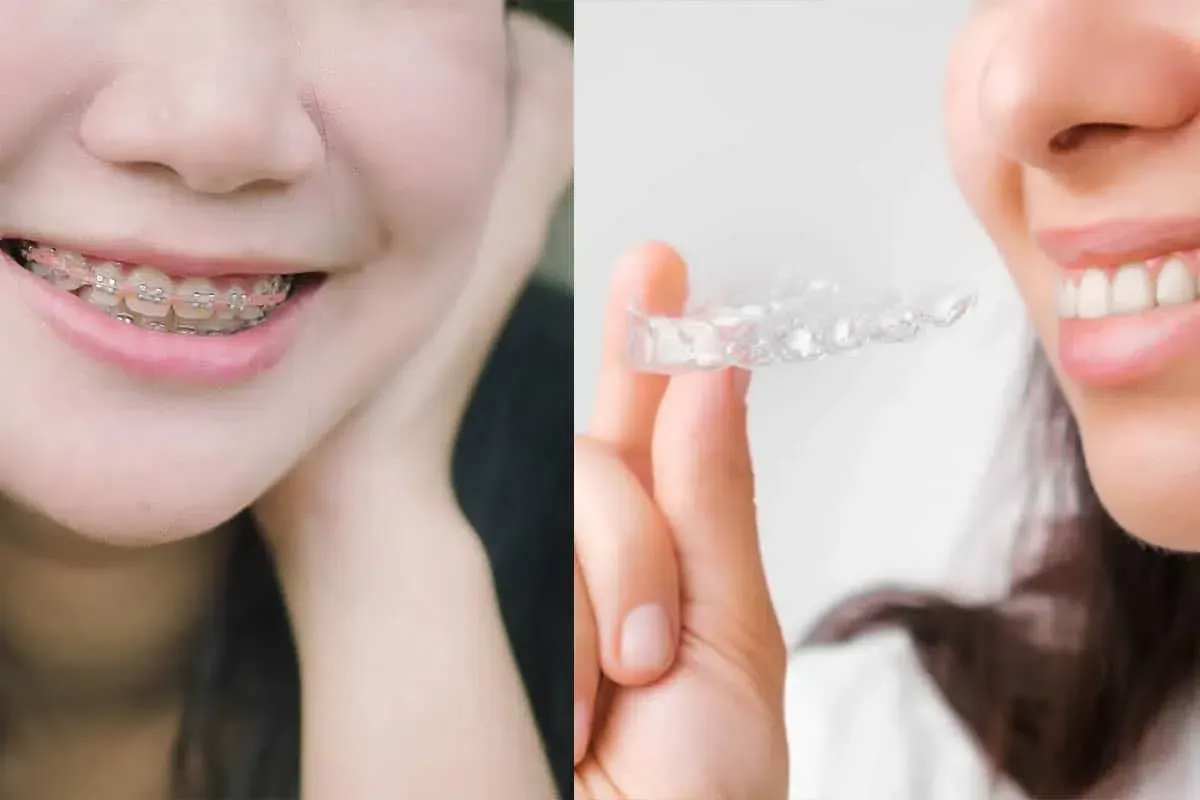
Braces vs Clear Aligners
Braces vs Clear Aligners: Which Orthodontic Option Is Right for You?
Introduction
Orthodontic treatment is no longer limited to traditional metal braces. Today, patients can choose between braces and clear aligners, each with its own advantages.
The best option depends on your dental condition, lifestyle, and expectations — not trends or advertisements. This article explains the differences clearly, so you can make an informed decision.
At Innovative Dental Center, we offer both options and guide patients based on clinical need, not preference alone.
What Are Traditional Braces?
Braces consist of:
Brackets attached to the teeth
Wires that guide tooth movement
Elastic or self-ligating components
They apply continuous, controlled forces and are highly effective for a wide range of orthodontic problems.
What Are Clear Aligners?
Clear aligners are:
Removable, transparent trays
Custom-made using digital scans
Changed every 1–2 weeks
They gradually move teeth through a series of planned stages.
Key Differences Between Braces and Aligners
Effectiveness
Braces: Suitable for simple to complex cases
Aligners: Best for mild to moderate cases
Aesthetics
Braces: Visible (though ceramic options are available)
Aligners: Nearly invisible
Comfort
Braces: May cause temporary soreness
Aligners: Generally more comfortable
Compliance
Braces: Fixed, no patient responsibility
Aligners: Must be worn 20–22 hours per day
Oral Hygiene
Braces: Requires extra care
Aligners: Easier cleaning due to removability
Which Option Is Better for Adults?
Many adults prefer aligners due to:
Discreet appearance
Professional lifestyle compatibility
However, braces may still be recommended if:
Tooth movement is complex
Precise control is needed
Compliance is a concern
The “best” option is always the one that delivers predictable, stable results.
Are Clear Aligners Slower Than Braces?
Not necessarily. But many cases show shorter treatment time when the aligner is worn as recommended.
Treatment time depends on:
Case complexity
Patient compliance
Biological response
Poor aligner wear can significantly delay results.
Can Children and Teenagers Use Aligners?
Yes, in selected cases. However:
Growth considerations
Responsibility level
Type of malocclusion
must all be evaluated before choosing aligners for younger patients.
Frequently Asked Questions
Are aligners less effective than braces?
For certain cases, yes. For others, they are equally effective.
Do braces damage teeth?
No, if oral hygiene is maintained properly.
Can I eat normally with braces?
Some foods should be avoided, but normal eating is possible.
Are aligners painful?
They may cause mild pressure, especially when switching trays.
Who decides which option I get?
The orthodontist, based on diagnosis — not marketing trends.
Are aligners faster than braces?
Treatment time varies. For mild cases, aligners can be faster, but complex cases may require braces.
Can adults use braces or aligners?
Yes. Both options are effective for adults, provided oral health is good.
Can I eat normally with braces?
Avoid hard, sticky, or chewy foods that could damage brackets or wires.
Will my teeth move back after treatment?
Yes — retainers are necessary regardless of appliance choice
Comparing Braces and Aligners
Feature Braces Clear Aligners
Visibility Visible Nearly invisible
Comfort Moderate, initial soreness Usually comfortable
Oral Hygiene Requires meticulous care Easier to clean teeth
Treatment Complexity Handles severe cases Best for mild to moderate
Diet Some limitations No limitations
Choosing the Right Option at Innovative Dental Center
At Innovative Dental Center, orthodontic treatment planning includes:
Detailed digital analysis
Clear explanation of options
Honest discussion of limitations
Personalized treatment planning for braces or aligners
Ongoing monitoring to ensure optimal results
Comfortable, patient-centered care for all ages
We don’t believe in “one solution for everyone.”
We believe in the right solution for each patient.


